The Pro­gram­ming Pro­jec­t

A clear Fordel.

See S­lides

Table of Contents
  1. In­troduc­tion§1
    1. Who are Y­ou?§1.1
      1. What are we go­ing to learn?§1.2
        1. What are we go­ing to do?§1.3
          1. Wait, are the re­quire­ments chang­ing?§1.4
            1. Why ran­dom group­s?§1.5
              1. Why are we do­ing a Group Con­trac­t?§1.6
                1. We wan­t struc­ture!§1.7
                  1. What are we not al­lowed to do?§1.8
                    1. How are we grad­ed?§1.9
                      1. What if I re­al­ly wan­t to fail?§1.10
                        1. What is the Con­tri­bu­tion S­core?§1.11
                          1. What if we wan­t to know more?§1.12
                            1. What if we wan­t help?§1.13
                              1. What now?§1.14
                              2. The Tech­ni­cal Part§2
                                1. User Sto­ries§2.1
                                  1. The Tech­nolo­gies§2.2
                                    1. HTTP§2.3
                                      1. Trans­ac­tion­s and U­nit-of-­Work§2.4
                                        1. Mi­gra­tions§2.5
                                          1. De­pen­den­cies and In­ver­sion§2.6
                                            1. Test­ing§2.7
                                              1. Cover­age§2.8
                                              2. Ques­tion­s?§3

                                                This a lec­ture note for first lec­ture, al­l de­tail­s are in home as well.

                                                In­troduc­tion §1

                                                Who are Y­ou? §1.1

                                                Me? My name is Chris­t­ian Gram Kalhauge chrg@d­tu.d­k, I'm an as­so­ci­ate pro­fes­sor, and I look for­ward to teach­ing y­ou.

                                                • Chris­t­ian, and

                                                • TA Chris­t­ian (2 hours af­ter 13, most days)

                                                I have weird teach­ing phi­los­o­phy, which y­ou should check out (home (§1.2)).

                                                Y­ou on­ly learn from y­our mis­takes.

                                                What are we go­ing to learn? §1.2

                                                Please check out the sec­tion: home (§1.1)

                                                • Working in s­mal­l group­s

                                                • Pri­or­i­tize re­quire­ments

                                                • Ver­i­fy the code

                                                • Use ver­sion con­trol

                                                What are we go­ing to do? §1.3

                                                Please check out home (§1.4).

                                                • From 4th of June to 26th of June,

                                                • Work in ran­dom group­s of four, to

                                                • Build a re­al prod­uc­t,

                                                • with chang­ing re­quire­ments.

                                                • UT­D need­s a pro­jec­t and in­tern­ship allo­ca­tor.

                                                • Y­ou al­ready have some code.

                                                Wait, are the re­quire­ments chang­ing? §1.4

                                                • Yes, at every meet­ing y­ou will get more US to do.

                                                • Y­ou have to fig­ure out what cus­tomer wants.

                                                • Out of meet­ing y­ou can send e­mail­s, but ex­pec­t some de­lay.

                                                Why ran­dom group­s? §1.5

                                                See home (§1.6)!

                                                • Mim­ic Na­ture

                                                • Help y­ou get a big­ger net­work

                                                Why are we do­ing a Group Con­trac­t? §1.6

                                                See home (§2.1) for more.

                                                • A great change to set ex­pec­ta­tion­s.

                                                • It will be the le­gal doc­u­men­t we will hold y­ou to, if dis­putes hap­pen­s.

                                                • How much do y­ou wan­t to work?

                                                • What hap­pen­s is some­one is not pulling their weight?

                                                • Or, if they pul­l too much?

                                                • In sick­ness and health.

                                                • What is u­n­ac­cept­able be­hav­ior?

                                                • If y­ou work 120 hours, what grade would y­ou ex­pec­t?

                                                • How many hours on top would an bet­ter grade be worth to y­ou?

                                                • How many sick days can y­ou have?

                                                • Is us­ing GenAI okay?

                                                We wan­t struc­ture! §1.7

                                                See the 2025 Course Plan struc­ture.

                                                What are we not al­lowed to do? §1.8

                                                Please check out home (§1.3)

                                                • Plagi­a­rise.

                                                • Break Copy­right.

                                                • Copi­lot and Chat­G­P­T is fine, but y­ou own the code.

                                                How are we grad­ed? §1.9

                                                Please check out home (§3)!

                                                • Val­ue produced to the cus­tomer,

                                                • y­our re­port,

                                                • the amoun­t and qual­i­ty of the code writ­ten and test­ed,

                                                • y­our team work, and

                                                • y­our re­flec­tion­s on les­son­s learned.

                                                What if I re­al­ly wan­t to fail? §1.10

                                                It is very hard to fail this course, but there are some sim­ple rules in­spired by the LEGO mod­el.

                                                Blame is not for fail­ure, it is for fail­ing to help or ask for help. ― Jor­gen Vig Knud­stor­p

                                                So the an­swer is sim­ple:

                                                • Do not write any code, or

                                                • Pre­ven­t y­our group mem­ber­s from writ­ing code.

                                                Writ­ing test­s is a great way to get un­stuck and cre­ate val­ue.

                                                What is the Con­tri­bu­tion S­core? §1.11

                                                Please check out: Con­tri­bu­tion S­core!

                                                • A clever way to cal­cu­late how much of the fi­nal ver­sion y­ou con­tributed to.

                                                • On­ly look­s at source code and the re­port.

                                                • Y­ou will get feed­back be­fore each meet­ing.

                                                We have our code in a Git repos­i­to­ry, on git-lab.

                                                • Y­ou can­not push di­rect­ly to the main branch (use pul­l re­quest­s).

                                                • On­ly com­mit­s where y­ou are the au­thor counts.

                                                • If y­ou are pair pro­gram­ming, switch be­tween au­thors.

                                                What if we wan­t to know more? §1.12

                                                • Use the web­page :), but

                                                • let me know if some­thing is mis­s­ing.

                                                What if we wan­t help? §1.13

                                                • Use the TA s­lot­s (af­ter 13, most days),

                                                • Con­tac­t the TA or Me on e­mail­s or team­s,

                                                • I might arrange Q/A's dur­ing the course if need­ed.

                                                • Send anony­mous feed­back! home (§5)

                                                What now? §1.14

                                                • Make sure to fil­l out y­our Group Con­tract­s, home (§2.1).

                                                • Cre­ate a Git­lab (§4) ac­coun­t.

                                                • Come talk to me when both is done, and I'l­l cre­ate y­our repos­i­to­ry.

                                                The Tech­ni­cal Part §2

                                                Now we are ready to get tech­ni­cal.

                                                User Sto­ries §2.1

                                                We use User S­to­ry to rep­re­sen­t the re­quire­ments.

                                                As a stu­den­t I wan­t to have con­stan­t feed­back so that I use the feed­back to im­prove.

                                                The Tech­nolo­gies §2.2

                                                The code us­es the fol­low­ing tech­nolo­gies.

                                                HTTP §2.3

                                                We are serving our sites us­ing HTTP5.

                                                Figure HTTP is a Pro­to­col
                                                Figure from md­n web­doc­s.
                                                Figure from md­m web­doc­s

                                                A get re­quest look­s like this:

                                                @GetMapping("/login")
                                                public String getLogin() {
                                                    return "login"; // Render the login template
                                                }

                                                And a post re­quest look­s like this:

                                                @PostMapping("/login")
                                                public String postLogin(
                                                        @RequestParam("email") String email,
                                                        @RequestParam("password") String password,
                                                        Model model,
                                                        HttpSession session) {
                                                
                                                    // ...
                                                
                                                    session.setAttribute("auth", auth);
                                                
                                                    return "redirect:/";
                                                
                                                }

                                                Note that we re­trive the email and password from the re­quest, and then use the Http Ses­sion to save the au­thenti­ca­tion to an auth attribut­e. A ses­sion is the way a serv­er can keep track of who is making the re­quest.

                                                Trans­ac­tion­s and U­nit-of-­Work §2.4

                                                When y­ou use the code cur­ren­t code y­ou might sud­den­ly think, why did my data­base ac­tion not com­mit. It is be­cause it has not been com­mit­ted to source.

                                                This is be­cause we use Trans­ac­tion­s, a trans­ac­tion is the way to en­sure that y­our da­ta is con­sis­ten­t. It work­s by ei­ther ac­cept­ing the ful­l trans­ac­tion or none of it.

                                                The good thing about a key-chain is that y­ou lose al­l y­our keys at once.

                                                In our code we do it like this:

                                                try (var uow = unitOfWork.begin()) {
                                                    auth = authenticator.authenticate(user, password);
                                                    uow.commit();
                                                }

                                                Mi­gra­tions §2.5

                                                The on­ly con­stan­t in soft­ware de­vel­op­men­t is change. We can there­fore not ex­pec­t our data­base to re­main the same. We there­fore use a Mi­gra­tion sys­tem. It is very sim­ple. We keep a num­bered list of mi­gra­tions in the main/resources/migration fold­er, and a ver­sion in our data­base. If the ver­sion of our data­base is s­mall­er than the lat­est mi­gra­tion, we run al­l new­er mi­gra­tion up­dat­ing the serv­er in the process.

                                                In sum­ma­ry,

                                                • In file X.sql de­scribe how to go from data­base X-1 to X.

                                                • N­ev­er change a mi­gra­tion file, af­ter it has been de­ployed.

                                                • Just cre­ate a new one.

                                                De­pen­den­cies and In­ver­sion §2.6

                                                In the de­sign of the web­page so far, we have used de­pen­den­cy De­pen­den­cy In­jec­tion and in­ver­sion. The idea is to make the in­n­er ob­ject­s de­pend on­ly on the be­hav­ior they need and then have the ex­ter­nal pack­ages de­pend on them!

                                                Figure Bad de­pen­den­cies
                                                Figure In­versed De­pen­den­cies

                                                Test­ing §2.7

                                                It is im­por­tan­t to test y­our code, we d­if­fer­en­ti­ate be­tween t­wo kind­s of test­s.

                                                • U­nit Test­s (On­ly test the be­hav­ior)

                                                • End-­to-End Test­s (Test every­thing)

                                                Test­ing is of­ten done in three stages:

                                                • Arrange (Set­up the s­tate)

                                                • Ac­t (Do some­thing)

                                                • As­sert (Check the s­tate has changed correct­ly)

                                                @Test
                                                @DisplayName("with no local is invalid")
                                                void with_no_domain_is_invalid() {
                                                    var t = assertThrows(InvalidEmail.class, 
                                                      () -> Email.of("my@"));
                                                    assertEquals("domain is empty", t.getMessage());
                                                }

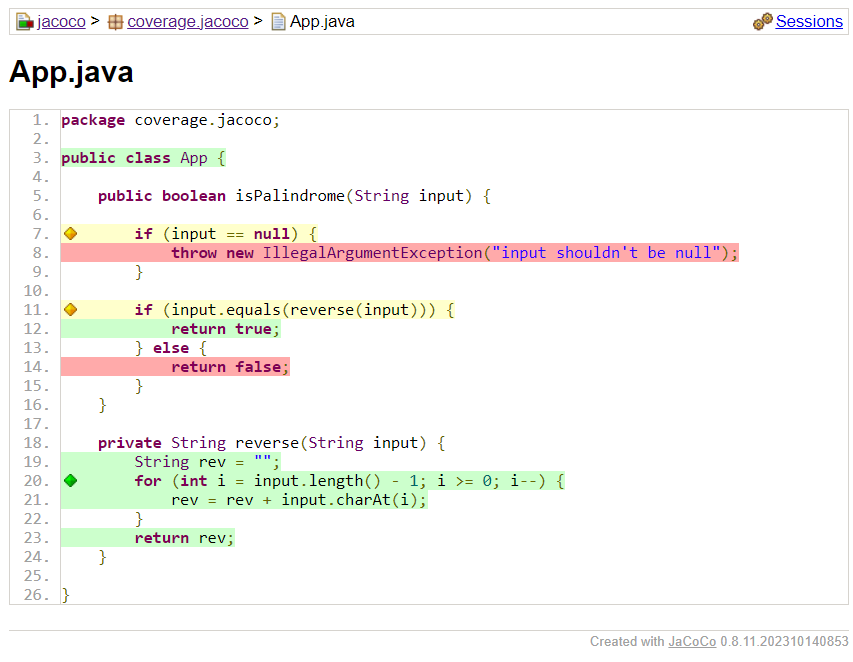
                                                Cover­age §2.8

                                                We test the num­ber of lines or branch­es run by our test­s.

                                                Figure Code cover­age re­port, bor­rowed from geeks­forgeek­s.
                                                • 100% is im­pos­si­ble, but

                                                • 0% is u­n­ac­cept­able.

                                                Ques­tion­s? §3

                                                Now is the time for ques­tion­s.