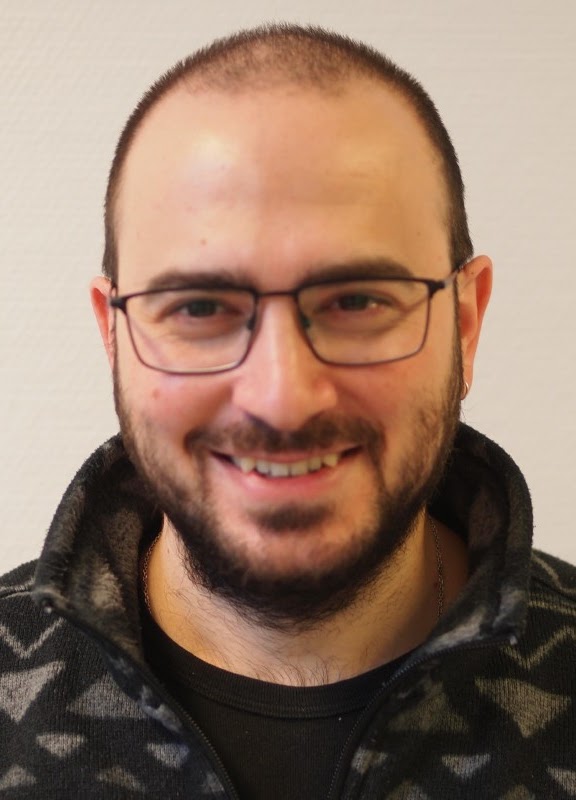
Georgios Arvanitidis
I am an associate professor at the Section for Cognitive Systems (CogSys) at the Technical University of Denmark (DTU). Before that, I was a PostDoc at the Max Planck Institute for Intelligent Systems with Bernhard Schölkopf. I completed my PhD at CogSys supervised by Søren Hauberg, and I also visited Philipp Hennig's Probabilistic Numerics group during this time. I obtained my Master's degree in Computer Science from the Saarland University supported by the Max Planck Institute for Informatics. Everything started from the Department of Informatics at the Aristotle University of Thessaloniki where I received my Bachelor's degree.
name@dtu.dk (replace "name" with "gear")
Building 321, room 224
[ Google scholar ] [ Github ]
Research interests
- Differential geometry in machine learning
- Representation learning
- Generative models
- Deep learning theory
- Approximate Bayesian inference
Team
- Alejandro Valverde Mahou (PhD, supervisor)
- Johanna Marie Gegenfurtner (PhD, supervisor)
- Albert Kjøller Jacobsen (PhD, supervisor)
- Naima Elosegui Borras (PhD, supervisor)
- Lenka Tětková (PostDoc, supervisor)
- Albert López i Serrano (PhD, co-supervisor)
Publications

Marcelo Hartmann, Luu Hoang Phuc Hau, Anton Mallasto, Albert Kjøller Jacobsen, Georgios Arvanitidis, Søren Hauberg, Håvard Rue, Mark Girolami
arXiv preprint, 2026
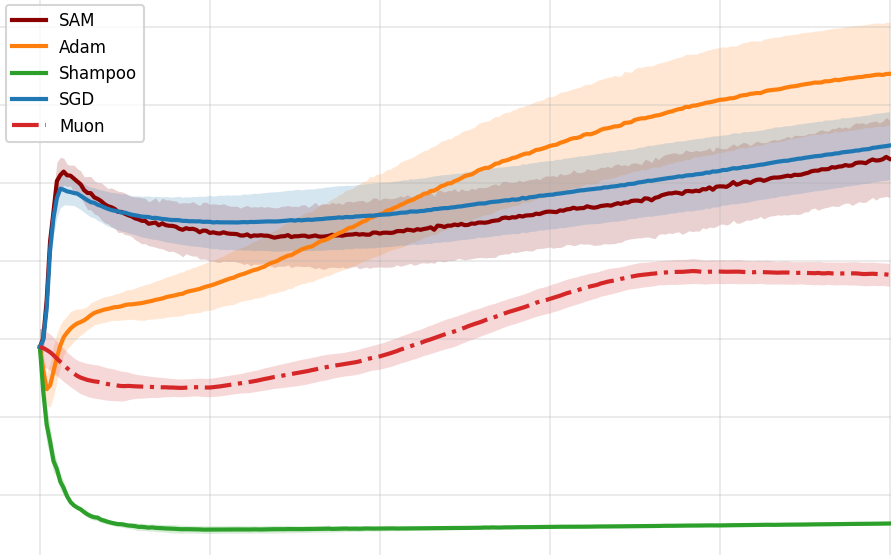
Johanna Marie Gegenfurtner, Naima Elosegui Borras, Georgios Arvanitidis
ICML Workshop on Weight-Space Symmetries: from Foundations to Practical Applications (WSS), 2026
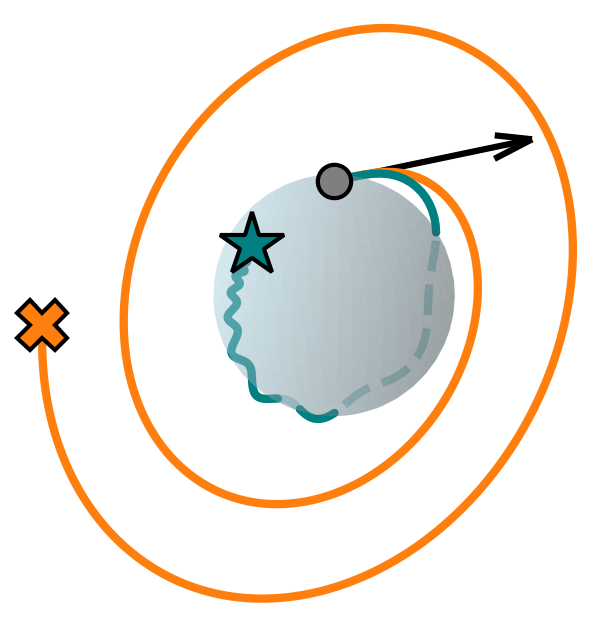
Albert Kjøller Jacobsen, Leo Uhre Jakobsen, Johanna Marie Gegenfurtner, Georgios Arvanitidis
arXiv preprint, 2026
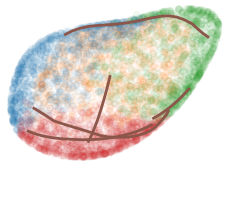
Hanlin Yu, Søren Hauberg, Marcelo Hartmann, Arto Klami, Georgios Arvanitidis
International Conference on Artificial Intelligence and Statistics (AISTATS), 2026

Lorenzo Cazzella, Søren Hauberg, Georgios Arvanitidis, Matteo Matteucci
International Conference on Artificial Intelligence and Statistics (AISTATS), 2026

Albert Kjøller Jacobsen, Johanna Marie Gegenfurtner, Georgios Arvanitidis
Northern Lights Deep Learning Conference (NLDL), 2026
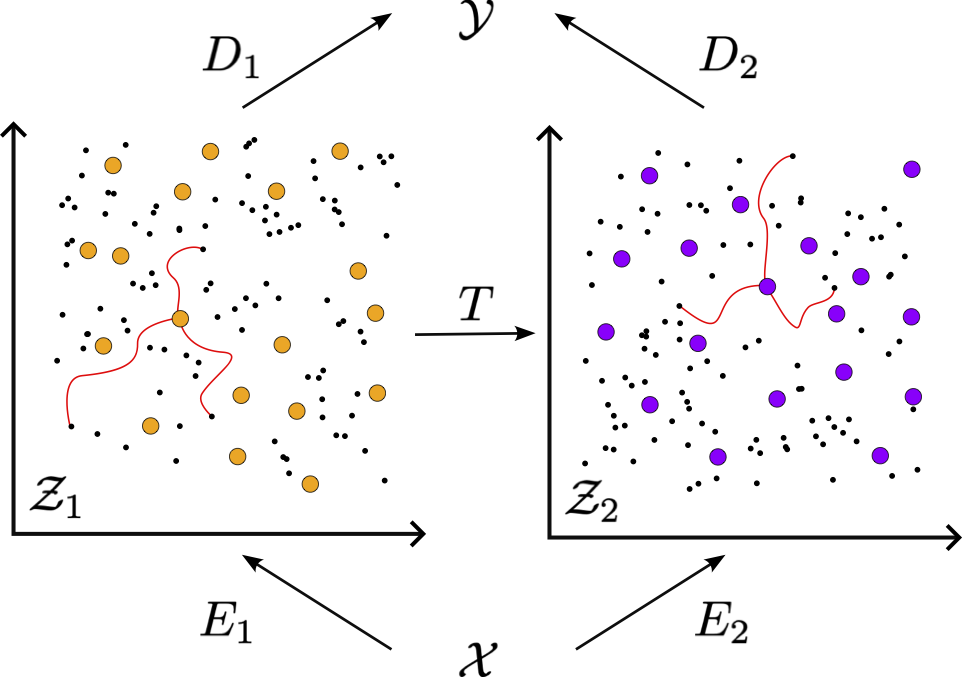
Hanlin Yu, Berfin Inal, Georgios Arvanitidis, Søren Hauberg, Francesco Locatello, Marco Fumero
Neural Information Processing Systems (NeurIPS), 2025
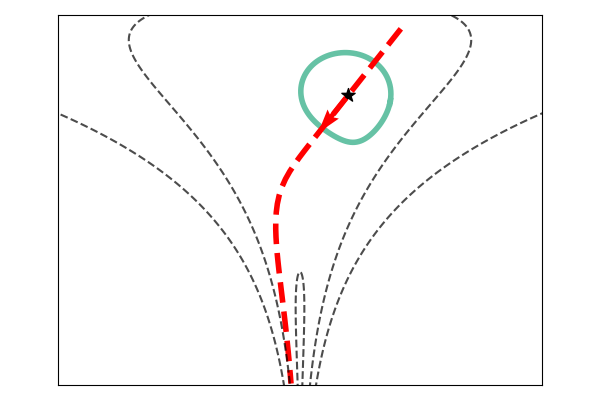
Bernardo Williams, Hanlin Yu, Hoang Phuc Hau Luu, Georgios Arvanitidis, Arto Klami
Uncertainty in Artificial Intelligence (UAI), 2025

Albert Kjøller Jacobsen, Georgios Arvanitidis
arXiv preprint, 2025

Hadi Beik-Mohammadi, Søren Hauberg, Georgios Arvanitidis, Gerhard Neumann and Leonel Rozo
International Journal of Robotics Research (IJRR), 2025

Paraskevas Pegios, Aasa Feragen, Andreas Abildtrup Hansen, Georgios Arvanitidis
NeurIPS Workshop on Symmetry and Geometry in Neural Representations (NeurReps), 2024

Hadi Beik-Mohammadi, Søren Hauberg, Georgios Arvanitidis, Nadia Figueroa, Gerhard Neumann, Leonel Rozo
International Conference on Representation Learning (ICLR), 2024

Alison Pouplin, Hrittik Roy, Sidak Pal Singh, Georgios Arvanitidis
arXiv preprint, 2023

Federico Bergamin, Pablo Moreno-Muñoz, Søren Hauberg, Georgios Arvanitidis
Neural Information Processing Systems (NeurIPS), 2023

Ricardo Dominguez-Olmedo, Amir-Hossein Karimi, Georgios Arvanitidis, Bernhard Schölkopf
International Conference on Machine Learning (ICML), 2023

Hadi Beik-Mohammadi, Søren Hauberg, Georgios Arvanitidis, Gerhard Neumann, Leonel Rozo
International Journal of Robotics Research (IJRR), 2023
pdf publisher's site video

Georgios Arvanitidis, Bogdan Georgiev, Bernhard Schölkopf
International Conference on Artificial Intelligence and Statistics (AISTATS), 2022

Georgios Arvanitidis, Miguel González-Duque, Alison Pouplin, Dimitris Kalatzis, Søren Hauberg
International Conference on Artificial Intelligence and Statistics (AISTATS), 2022

Hadi Beik-Mohammadi, Søren Hauberg, Georgios Arvanitidis, Gerhard Neumann, Leonel Rozo
Robotics: Science and Systems (R:SS), 2021


Georgios Arvanitidis, Søren Hauberg, Bernhard Schölkopf
International Conference on Artificial Intelligence and Statistics (AISTATS), 2021

Bogdan Georgiev, Lukas Franken, Mayukh Mukherjee, Georgios Arvanitidis
arXiv preprint, 2021

Dimitris Kalatzis, David Eklund, Georgios Arvanitidis, Søren Hauberg
International Conference on Machine Learning (ICML), 2020

Georgios Arvanitidis, Søren Hauberg, Philipp Hennig, Michael Schober
International Conference on Artificial Intelligence and Statistics (AISTATS), 2019


Tao Yang, Georgios Arvanitidis, Dongmei Fu, Xiaogang Li, Søren Hauberg
arXiv preprint, 2018

Georgios Arvanitidis, Lars Kai Hansen, Søren Hauberg
Geometric Science of Information (GSI), 2017


Georgios Arvanitidis, Anastasios Tefas
IEEE International Workshop on Machine Learning for Signal Processing (MLSP), 2012
Teaching
[02452 Fall '25, '26]
[02450 Fall '22, '23, '24]
[]
If you are interested in writing a BSc / BEng / MSc thesis in our group, please review the following information:
1. You should have attended relevant courses in the field of machine learning (e.g., 02451, 02452, 02460, 02456, 02477), and also have a good background in mathematics (calculus/statistics/linear algebra).
2. I focus on the following research topics. Please check if any of these resonate with your interests.
3. Please send an email with the following information:
- Transcript of records and current study status.
- Relevant courses / projects / experience in machine learning.
- Timeline (start and duration) and number of ECTS.
- Which topic are you considering.
Ideally, you should work on one of the suggested topics, and we will discuss particular ideas when we meet. If you have another idea, you should provide a short description, describing the problem, related literature, your planned approach / method, access to relevant data, etc. This process (usually) takes a couple of weeks, so please be proactive.
Suggested topics:
* Deep learning theory. One of the most interesting challenges is understanding why deep
learning models generalize so well on unseen data.
* Optimization techniques. The properties of optimization algorithms influence the behavior of modern machine learning models.
* Generative models. Learning the geometry of the manifold that approximates
the data enhances representation learning and statistical modeling.
[]
We run a reading group focused on recent papers and foundational topics in machine learning.
We meet weekly to present and discuss papers, share ongoing work, and exchange ideas in an informal setting. Students who are curious about the field are very welcome to join, even if only to listen.
If you would like to join, please send me an email with your CV and transcripts.
Funding
- GADL, Sapere Aude starting grant, DFF (Independent Research Fund Denmark)
- i-Rase, Pathfinder, EIC (European Innovation Council)
Services
- Reviewer: ICLR, TMLR.
- Area chair: NeurIPS, ICML, AISTATS, UAI.
- Co-organizer of the Machine Learning Summer School 2020 in Tübingen.
News
- Jun 22, 2026. Congrats to Lenka for the DDSA PostDoc scholarship! Welcome aboard!
- May 23, 2026. Congrats to Johanna and Naima for their paper at the ICML 2026 workshop WSS!
- May 18, 2026. New preprint from Albert! Cool stuff with Riemannian dynamics.
- January 25, 2026. Congrats to Hanlin and Lorenzo for getting their papers accepted at AISTATS 2026!
- November 17, 2025. Congrats to Johanna and Albert for getting their paper accepted at NLDL 2026!
- October 15, 2025. Naima joined the crew! Welcome aboard!
- September 25, 2025. New preprint from Johanna and Albert.
- September 22, 2025. Paper accepted at NeurIPS 2025! Congrats Hanlin!
- June 25, 2025. Congrats to Albert for the DDSA PhD scholarship!
- June 10, 2025. Talk at the Nordic-Baltic Biometric Conference (NBBC) 2025.
- May 7, 2025. Paper accepted at UAI 2025! Congrats Bernardo!
- April 1, 2025. Talk at the Department of Mathematics, Aristotle University of Thessaloniki, for the Theoretical Computer Science and Formal Methods seminar.
- March 1, 2025. Albert joined the crew! Welcome aboard!
- February 28, 2025. New preprint from Bernardo.
- February 12, 2025. New preprint from Albert.
- November 20, 2024. New preprint from Hadi.
- October 18, 2024. Paper accepted at NeurReps 2024 workshop. Congrats Paraskevas!
- September 1, 2024. Johanna joined the crew! Welcome aboard!
- June 1, 2024. Alejandro joined the crew! Welcome aboard!
- January 18, 2024. Congrats to Hadi for the spotlight at ICLR 2024! We develop a neural network model to learn dynamical systems with stability guarantees.
- January 1, 2024. Starting the year as an associate professor. Let's see what happens...
- November 30, 2023. The Independent Research Fund Denmark (Danmarks Frie Forskningsfond, DFF) has awarded me a Sapere Aude starting grant! This is absolutely fantastic! I will have two PhD positions open soon.
- September 22, 2023. Federico's paper (preprint) got accepted at NeurIPS 2023! Cool!
- July 10, 2023. New preprint from Alison! We analyze the loss landscape of deep nets via differential geometric principles. The first insights are fantastic!
- June 13, 2023. New preprint from Federico! We propose a Laplace approximation for Bayesian neural nets that adapts locally to the structure of the true posterior, by considering the parameter space as a Riemannian manifold! A simple trick full of potential!
- April 25, 2023. Great work from Ricardo, and our paper got accepted at ICML 2023! Establishing connections between causality and differential geometry! Groovy!
- July 11-15, 2022. I participated in LogML summer school as a tutor! A great event and very fun to interact with such a cool group of students!
- March 22, 2022. I gave a talk at SIAM - Geometric Methods for Understanding and Applying Machine Learning.
- March 16, 2022. New preprint from Hadi, which brings together geometry, robots, variational auto-encoders and change of variables!
- February 1, 2022. I started as tenure-track assistant professor at the Section for Cognitive Systems at the Technical University of Denmark. Fantastic to be back again! :-)
- January 19, 2022. Two papers accepted at AISTATS 2022!
- November 2, 2021. I gave a talk at the Computer Lab @ University of Cambridge about differential geometry for representation learning. Cool group! I wish I could visit!
- October 5, 2021. Check our new preprint where we study several properties of random deep nets based on the stable rank of the weight matrices.
- July 17, 2021. Our paper at R:SS 2021 got a best student paper award. Congratulations Hadi!
- July 15, 2021. I gave a talk about Riemannian manifolds learned from data at the workshop Geometry and Topology in Robotics: Learning, Optimization, Planning and Control (R:SS 2021).
- June 9, 2021. New preprint online! We show using information geometry that we can compute continuous shortest paths in the latent space of generative models which model non-continuous data. Quite funky!
- May 11, 2021. Hadi's paper got accepted to R:SS 2021! We control robots with geodesics in the latent space of generative models, while we take into account objects by changing the geometry of the ambient space!
- May 8, 2021. Christian's paper got accepted to ICML 2021! We apply probabilistic numeric techniques (Bayesian quadrature) to compute expectations on Riemannian manifolds under locally adaptive normal distributions! Cool!
- March 9, 2021. In our new preprint we show that we can approximate the induced Riemannian metric in the latent space of a generative model by a conformal metric that is based on a simple learnable prior. This turns out to be robust and efficient, while the behavior of shortest paths is similar.
- January 23, 2021. Our paper "Geometrically Enriched Latent Spaces" accepted at AISTATS 2021!
- August 4, 2020. Check our new preprint. We replace the Euclidean metric of the ambient space with a Riemannian data based metric. Thus, we encode domain knowledge in the latent space of a generative model and control the shortest paths therein.
- June 1, 2020. Best way to start the summer! Dimitris' paper got accepted at ICML 2020! We use Brownian motion on Riemannian manifolds to define a flexible prior in the latent space of a VAE.
- April 27, 2020. Due to the covid-19 the Machine Learning Summer School (MLSS) 2020 at Tübingen, will be a virtual event. This will be the first time of such an event in a virtual form. Eager to see the result.
- February 19, 2020. Since the latent space of a VAE is a curved space, prior distributions in there can be defined accordingly. Check the new preprint from Dimitris.
- September 3, 2019. Back to back! I got for the second year in a row, a best reviewer award for NeurIPS 2019.
- June 25, 2019. I will be one of the organizers of the Machine Learning Summer School (MLSS) 2020 at Tübingen
- June 1, 2019. I start my postdoc in the Empirical Inference department at the Max Planck Institute for Intelligent Systems at Tübingen, where I will be working with Bernhard Schölkopf. Das ist fantastisch! :-)
- May 31, 2019. Here you can find my PhD thesis, in case you are interested to know how differential geometry can be applied in machine learning. For any questions, doubts (or potential mistakes) please feel free to contact me. :-)
- April 16, 2019. Very long trip to Okinawa (Japan) for AISTATS 2019, however, the conference worth it.
- April 12, 2019. My PhD is officially finished after a great defence. Special thanks to the wonderful committee Mark Girolami, David Pfau and Ole Winther.
- March 25, 2019. I uploaded the code from my PhD thesis and papers here.
- January 31, 2019. My last day as PhD student, I just submitted my thesis. Very strange and mixed feelings! Quite unpleasant to leave my awesome group. Getting ready for the new challenge though.
- January 23, 2019. The preprint of the AISTATS 2019 paper is now available.
- December 24, 2018. Our work "Fast and Robust Shortest Paths on Manifolds Learned from Data" accepted at AISTATS 2019. What a fantastic way to finish the PhD. :-)
- September 9, 2018. It seems that I was one of the best reviewers for the NeurIPS 2018. Indeed, very flattering.
- April 1, 2018. Back to base! Returned from the external stay. Fantastic experiences during my external stay, thanks to all the people there!
- January 29, 2018. Our paper on the latent space geometry of the deep generative models accepted at ICLR 2018. Wonderful!
- December 8, 2017. I presented at the Geometric Data Analysis workshop at NeurIPS 2017 an overview of our work on the LAND model and its extensions.
- November 8, 2017. Very happy to give a talk about geometrical machine learning models at the Geometric Science of Information conference. By the way, Paris is beautiful.
- October 31, 2017. When deep learning meets geometry preprint. See why the latent space geometry of the notorious deep generative models is highly non-linear.
- September 1, 2017. Starting my external stay at the Max Planck for Intelligent Systems at Tübingen. I will be a part of the Probabilistic Numerics group for the next six months.
- July 3, 2017. We continue our research on the LAND model. We try to estimate the Riemannian metric with our new paper at GSI 2017.
- June 12, 2017. The summer school in Nonlinear Statistics at DIKU was amazing. Super interesting to see how geometry is used in several other research fields.
- December 6, 2016. We presented our work at NeurIPS 2016! Great experience to be a part of such a conference.
- September 12, 2016. I participated in the Gaussian Process Summer School at Sheffield. The uncertainty quantification rules!
- August 12, 2016. Our paper on locally adaptive normal distributions accepted at NeurIPS 2016. This is awesome!
- June 1, 2016. My personal website is finally online.
Alumni
- Alison Pouplin (PhD, co-supervisor)
- Georgios Pantis (Research assistant)